
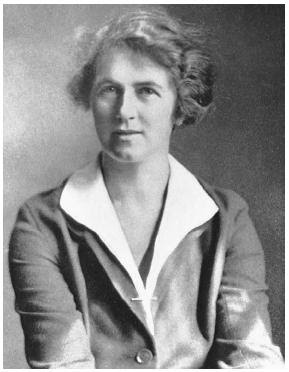
Few individuals in the history of psychical research were subjected to scrutiny as intense, prolonged, and adversarial as Mina Crandon, known in research literature as “Margery.”
Her case sits at the intersection of metapsychics, psychology, and experimental science, not as a curiosity, but as a stress test for validation itself.
A Unique Experimental Subject
During the 1910s and 1920s, Mina Crandon participated in an unparalleled series of investigations conducted by scientists, physicians, psychologists, engineers, and professional skeptics.
Unlike many mediums of her time, her phenomena were not studied in private or devotional settings, but under increasing experimental control. These included physical restraints, electrical circuits, infrared observation, sealed cabinets, and adversarial monitoring.
The goal was explicit: to determine whether observed effects could be explained by fraud, unconscious muscular action, dissociation, suggestion, or other known mechanisms — or whether they exceeded available explanatory models.
Where Validation Became the Problem
The investigations into Margery did not fail because phenomena were absent. They failed because existing science lacked agreed-upon criteria for validation.
When controls were tightened, some phenomena ceased, others persisted, and still others appeared intermittently. Neither consistent confirmation nor definitive debunking could be achieved.
This ambiguity proved more destabilizing to scientific authority than clear fraud would have been.
The Limits of Psychological Reduction
Psychological explanations were proposed: dissociation, unconscious performance, ideomotor action, and projection. Yet none could fully account for the range, specificity, and context-dependence of the observed effects.
Carl Jung followed such cases closely, recognizing that boundary phenomena could not be dismissed without addressing their psychological consequences.
At the same time, those consequences did not substitute for validation. Meaning alone could not resolve the empirical question.
Mina Crandon as a Structural Case
Margery’s importance lies not in whether one accepts or rejects any particular explanation. Her significance lies in what her case revealed structurally.
It exposed a fault line between observation and validation: science could witness phenomena, but lacked a method to stabilize identity, continuity, and agency across repeated testing.
The problem was not the presence of phenomena, but the absence of a framework capable of deciding what they meant.
Why the Case Remains Unfinished
The Margery investigations were eventually abandoned, not because a conclusion was reached, but because the field itself retreated.
The scientific community increasingly framed the subject as professionally hazardous, and the absence of a validation methodology made continued engagement untenable.
What remained unresolved was not belief, but method.
From Margery to Method
Mina Crandon represents the point at which Richet’s empirical courage and Jung’s psychological insight encountered their shared limitation.
Her case demonstrates why neither observation alone nor interpretation alone is sufficient. Without a validation procedure, the field cannot move forward.
It is precisely this unresolved requirement that later efforts must address: the ability to discriminate individual agency, continuity, and information content under conditions designed for critical scrutiny.
Mina Crandon remains not a closed chapter, but a landmark — marking where science reached the threshold and stopped.
References
- Rhine, J. B. et al. (1927). Report on the Margery Mediumship. Journal of the American Society for Psychical Research.
- Bird, J. M. (1930). “Margery” the Medium: A Two Year Investigation of a Physical Medium.
Boston: Small, Maynard & Company - Scientific American (1924–1925). Reports of the Scientific American Committee on Psychic Phenomena.
- McCabe, J. (1925). Spiritualism: A Popular History from 1847. Dodd, Mead & Company.
- Dingwall, E. J. (1962). Some Human Oddities. Rider & Company.